
 May 09, 2026 - POR Administrador
Geological Analysis of the Jarpaña Geyser: The Science Behind the Red Lagoon
Located in the Paratía district, the Jarpaña Geyser is an extreme ecosystem where the cold of the puna collides with underground heat. Through a visual analysis of ground and aerial sequences, it is possible to observe the evolution of this phenomenon: from cracked soils exhaling steam, through violent eruptions of mud and rock, to the formation of deep lagoons with reddish tones.
In this article, we will break down the hydrochemistry, terrain instability, and geodynamics that sculpt this fragile Andean landscape, ideal for science enthusiasts, drone photography, and ecotourism.
📋 Table of Contents
1. Eruptive Dynamics: From steam to rock expulsion
2. Thermalism and Minerals: The color spectrum
3. Soil Instability: Why is it dangerous to get close?
4. Geological Conclusion
5. Frequently Asked Questions (FAQ)
🌋 1. Eruptive Dynamics: From steam to rock expulsion
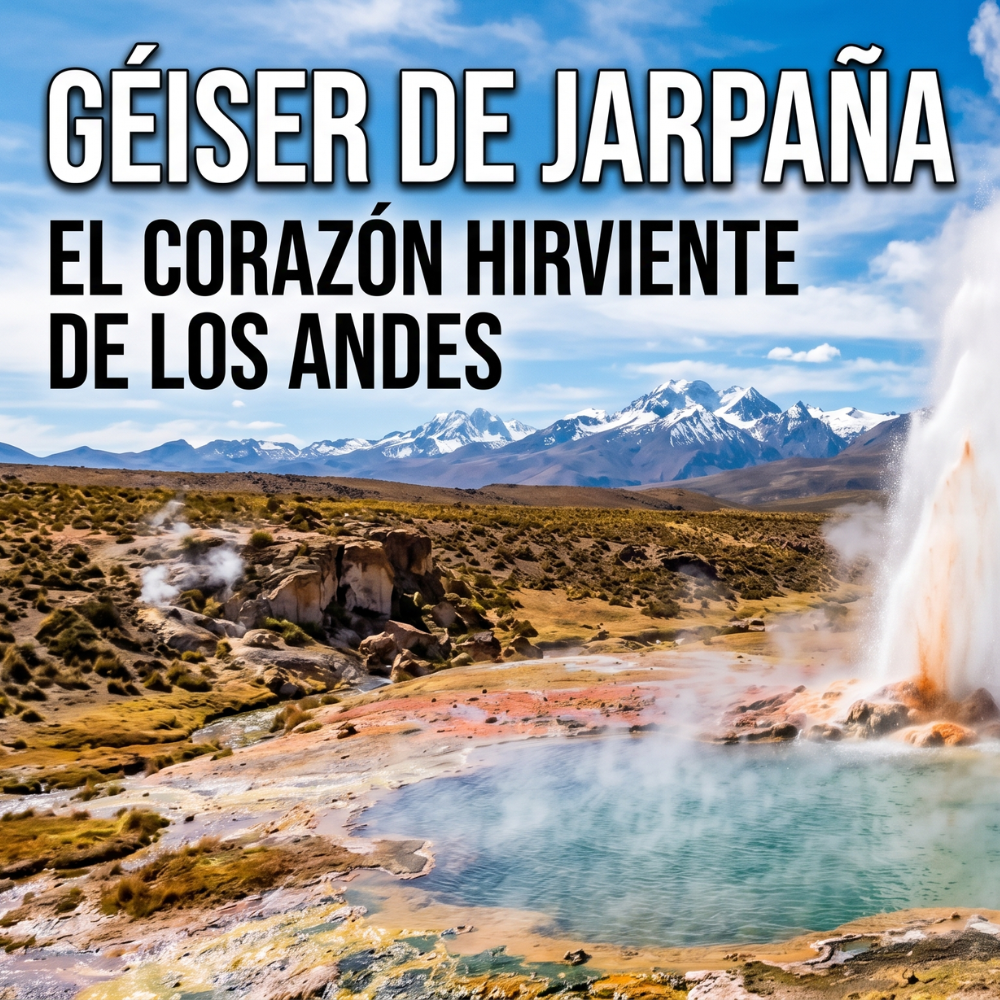
The visual record of Jarpaña reveals a highly active geothermal system. In the initial phases, an arid landscape is observed with deeply cracked earth from which multiple fumaroles emerge. This is the first indicator of high pressure from underground fluids interacting with the cold crust of the puna, framed by snow-capped mountains.
💥 The explosive phase
The system is not static. Ground-level recordings capture moments of violent energy release, where superheated water expands rapidly as it approaches the surface. This generates an eruption that not only expels thick columns of steam but also throws fragments of dark rocks and mud into the air, actively shaping the surrounding craters.
🧪 2. Thermalism and Minerals: The color spectrum
One of the most captivating phenomena, clearly visible in aerial shots, is the drastic chromatic transition of the thermal pools.
Water chemistry visually manifests itself in two main formations:
🔵 Cyan-turquoise crater: Surrounded by intricate terraces of mineral precipitation. The constantly boiling water contrasts sharply with the white silica deposits and intense orange crusts on its edges.
🔴 The great red lagoon: More extensive and with opaque waters. Its reddish and brownish coloration is due to the very high concentration of iron oxides and suspended clays, a product of the hydrothermal alteration of the underground volcanic rock.
⚠️ 3. Soil Instability: Why is it dangerous to get close?
Field analysis documents a significant geotechnical risk. Around the red lagoons, the terrain lacks firmness. Hydrothermal activity dissolves the underlying rock, creating hidden cavities.
As evidenced by drone mapping, the surface gradually sinks towards the center of the crater. Walking near the edges involves a critical risk of sinking (subsidence) into boiling mud. Therefore, the use of unmanned aerial vehicles (drones) has become essential to study these pools from a zenithal perspective, revealing drainage patterns and salt accumulations without risking human lives.
🌍 4. Geological Conclusion
The Jarpaña Geyser is a natural laboratory in constant transformation. From the violent expulsion of lithological material to the formation of chemical pools of iron oxide, this environment reminds us that the Andes are a living mountain range. Its preservation and continuous study are vital to understanding high-mountain geothermal systems.
🔍 5. Frequently Asked Questions (FAQ)
Why is the ground cracked around the geyser?
The extreme contrast between the sub-zero temperatures of the puna and the underground heat, coupled with the constant evaporation of highly salinized waters, causes the accelerated desiccation and fracturing of the surface clay.
Is it safe to fly drones over the boiling lagoons?
Although safer than walking along the unstable edges, pilots must exercise caution: dense columns of water vapor and sulfurous gases can condense on the drone's sensors and propellers, affecting its electronics and aerodynamics.
What causes the white edge around the turquoise pools?
It is siliceous sinter or travertine deposits. As the mineral-rich thermal water cools upon contact with the surface air, dissolved minerals (such as calcium carbonate or silica) precipitate and solidify, creating those white and orange edges.
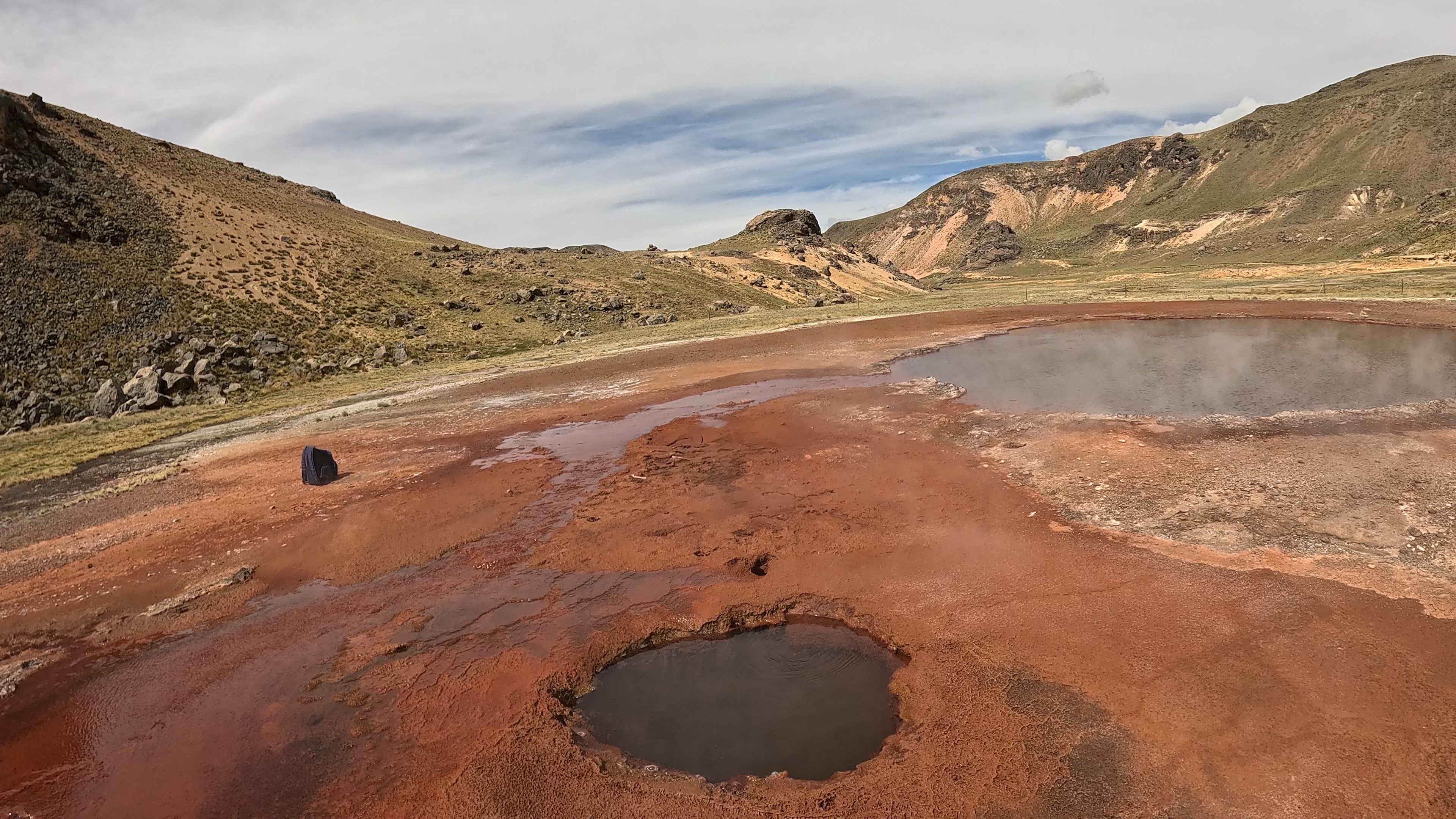 Photo 1 - May 2026
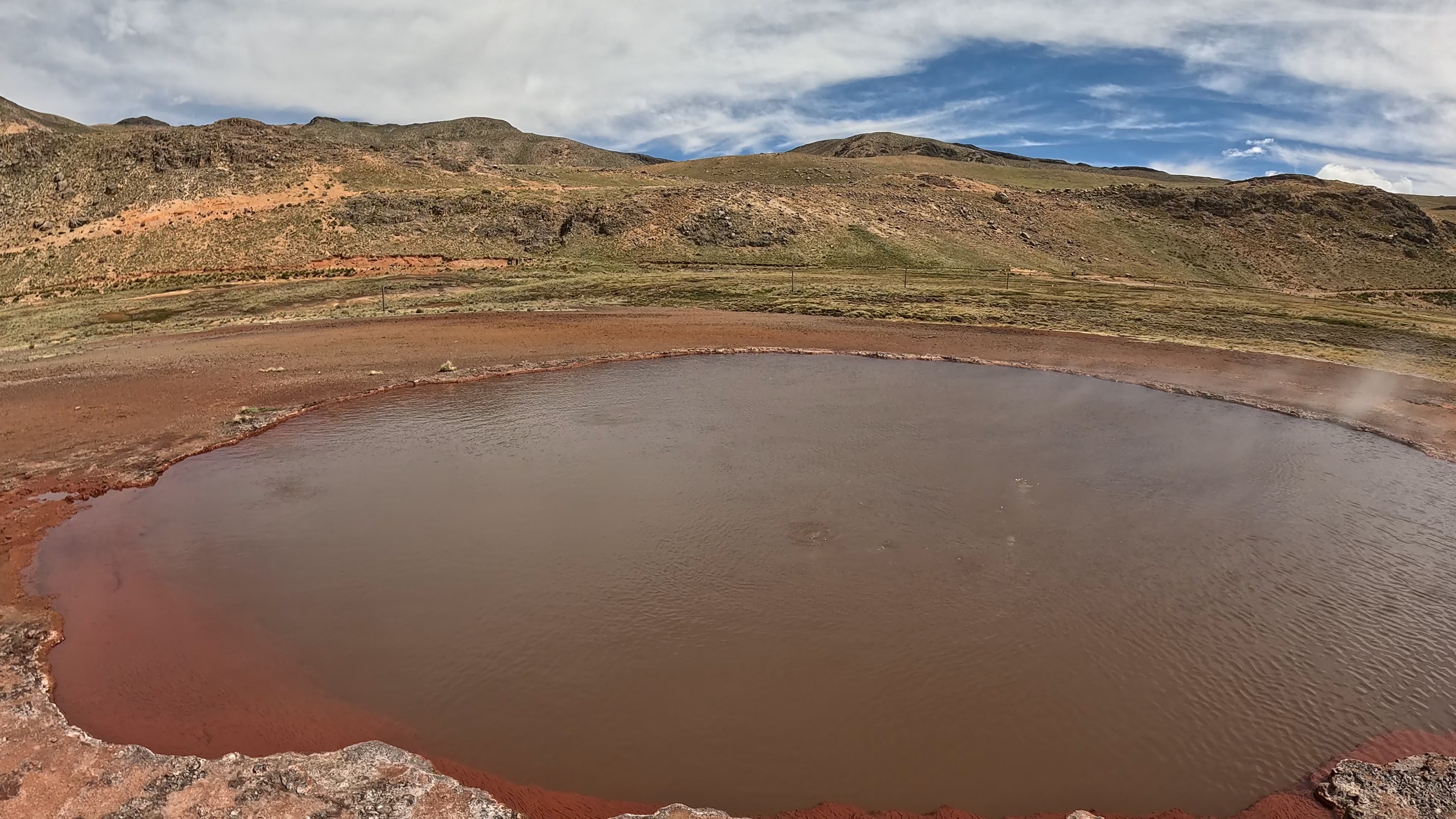 Photo 2 - May 2026